
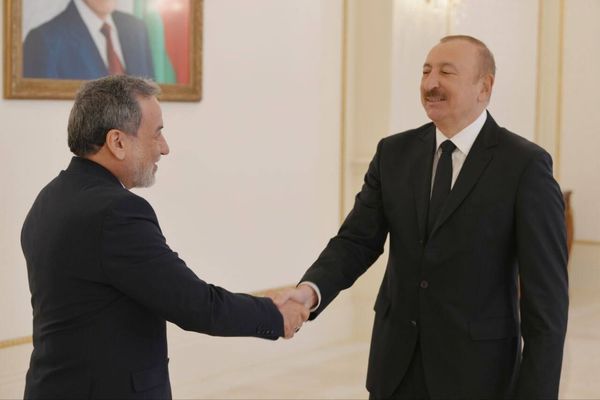
The Iranian Foreign Minister traveled to Baku yesterday evening to discuss expanding political, economic, and security cooperation, amidst a critical phase in relations between Tehran and Baku; a trip that, given the volatile history of relations between the two countries and regional developments, could create a new direction in bilateral interactions.
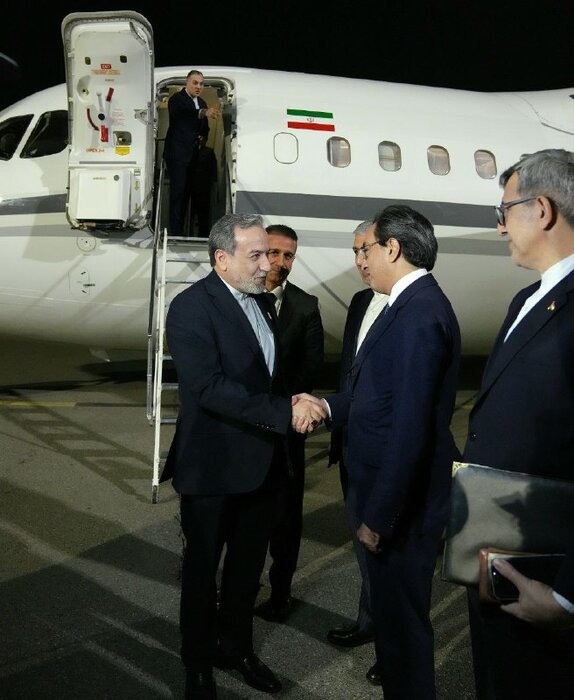
According to Ashura News, citing IRNA, Seyyed Abbas Araghchi left Tehran for the Republic of Azerbaijan yesterday evening (Sunday, December 6) and arrived at Baku's Heydar Aliyev Airport an hour later, welcomed by the regional director general of the Ministry of Foreign Affairs and the Azerbaijani ambassador to Tehran. This trip is taking place in a situation where relations between Tehran and Baku, despite occasional ups and downs, are still considered one of the most important axes of the Islamic Republic of Iran's neighborhood policy in the South Caucasus.
Relations between Iran and the Republic of Azerbaijan are rooted in deep historical, cultural and people-to-people ties and are not limited to the political developments of the past three decades. These ties have been the main basis for the formation of political, economic and cultural cooperation since the independence of Baku. Iran was one of the first countries to recognize the independence of the Republic of Azerbaijan and upgraded its representation in Baku, which had been active since the 1960s, to the level of an embassy. At critical junctures, Tehran has also supported the consolidation of the sovereignty of the Azerbaijani government.
The principle of neighborliness and regional stability has always been the focus of Iran's policy towards Azerbaijan. For example, Tehran considers the developments in the South Caucasus to be part of the region's collective security and emphasizes opposition to any change in international borders. This policy has also been reflected in recent interactions in Baku and in political talks between officials from the two countries.
Meanwhile, Araghchi's visit to Baku is taking place in the continuation of the regular consultations between the two countries. Iran-Azerbaijan relations are multifaceted, extensive, and include the fields of economy, energy, transportation, culture, border security, and regional cooperation. Despite occasional disagreements, the overall trend of relations has been expanding over the past three decades, and both sides have repeatedly emphasized the necessity of managing differences through dialogue.
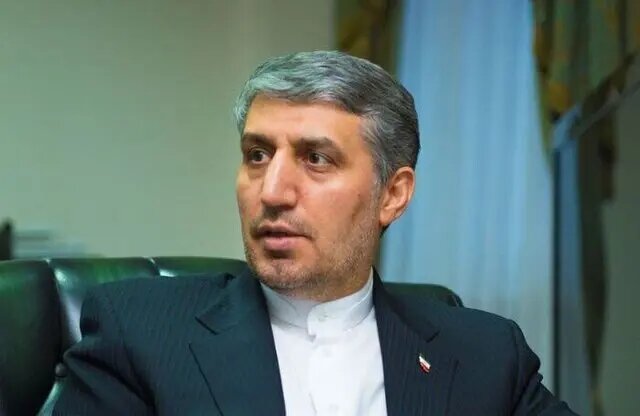
Speaking to IRNA on the eve of the Foreign Minister’s visit, Mojtaba Demirchilu, our country’s ambassador to Baku, said: “This visit, which is being held at the invitation of the Foreign Minister of the Republic of Azerbaijan, is within the framework of regular consultations that are ongoing between the Ministries of Foreign Affairs of the two countries at various levels. Of course, the continuation of meetings between the Foreign Ministers of the two countries is a valuable opportunity to review the progress of relations, assess the extent of implementation of agreements made, identify and coordinate to remove obstacles to the development of relations, and at the same time pursue new issues that are important from the perspective of each country and affect their interests. "The relations between Iran and the Republic of Azerbaijan are not limited to bilateral issues and discussions, and the two countries also have areas for common thinking and cooperation on many regional and international issues, which will naturally be addressed during this visit."
The Azerbaijani media have also given a positive reflection of this visit. In their reports, the Azernews, APA and Trend news agencies described Araghchi’s visit as a sign of a “new stage of dialogue” between the two countries and considered it an opportunity to strengthen economic cooperation, regional coordination and develop bilateral relations. The emphasis of these media on the importance of Tehran-Baku relations and their positive view of future cooperation reflects Baku’s determination to continue interacting with Tehran.
The agenda of this visit includes important issues such as economic and transit relations, border cooperation, regional issues and the pursuit of joint projects. Iran has always supported the development of transit and regional connectivity; provided that the projects are implemented within the framework of national sovereignty of countries and the principles of international law. Iran’s opposition to some projects, including the Zangezur corridor, has been based on legal and security considerations and has never addressed the principle of Azerbaijan’s connection with Nakhchivan or Türkiye.
In this regard, transit cooperation between Iran and Azerbaijan has a long history. Over the past 34 years, Iran has facilitated the access of the Nakhchivan Autonomous Republic to the Azerbaijani mainland without any expectations, and four border crossings between the two countries have been active 24 hours a day. With the operation of the Kalaleh-Aghband bridge, a fifth border crossing will be added to the communication network of the two sides.
Joint infrastructure projects also form an important part of the cooperation. The implementation of dams and hydroelectric power plants, the connection of road and rail transport networks, border facilities and energy transmission lines are among the plans that Tehran and Baku have pursued in recent years. The development of these projects plays an important role in strengthening economic cooperation and reducing political misunderstandings. In the cultural and popular sphere, given the extensive commonalities, the two countries have planned to hold cultural days, increase flights and facilitate the movement of citizens.
Meanwhile, Iran's relations with Armenia have always been a topic of discussion in Tehran-Baku talks. Iran's policy in this regard is not to take political or military sides with any of the conflicting parties, and Tehran has always emphasized the territorial integrity of the Republic of Azerbaijan. The first official document in which Armenia recognized the territorial integrity of Azerbaijan was the "Tehran Declaration" in May 1992, which was drafted at the initiative of Iran.
Our country's ambassador to Baku told IRNA in this regard: "Resolving conflicts and establishing peace and stability is in the interests of all countries in the region. The principled position of the Islamic Republic of Iran has always emphasized the peaceful resolution of conflicts, including Karabakh, based on the recognized principles of international law, and in this regard, it has emphasized the need to liberate the occupied territories and has taken initiatives. It should be noted that the first document in which respect for the territorial integrity of the Republic of Azerbaijan was emphasized and clarified by Armenia is the Tehran Declaration in May 1992. "Resolving the conflicts will certainly pave the way for further cooperation between Iran and the Republic of Azerbaijan, including for the implementation of joint border projects that have been stalled over the past years. Establishing peace and stability will provide the necessary security for economic projects in the region, and all countries in the region will benefit from it and contribute to the economic development of the region. Naturally, all countries in the region will benefit from it. Achieving sustainable stability in the region requires a comprehensive approach and consideration of the interests of all countries in the region. From this perspective, implementing regional projects by utilizing the capacities of the countries in the region, ensuring mutual benefits and preventing geopolitical manipulation of the region is of great importance."
The resolution of the Karabakh conflict has created a new opportunity for regional peace, stability and development. Recent visits by high-ranking officials from the two countries, including the visit of President Masoud Peshkesky, are a sign of the improving atmosphere and positive prospects for Tehran-Baku relations. An agreement to continue high-level meetings is on the agenda, and Araqchi's visit is also being evaluated in this context.
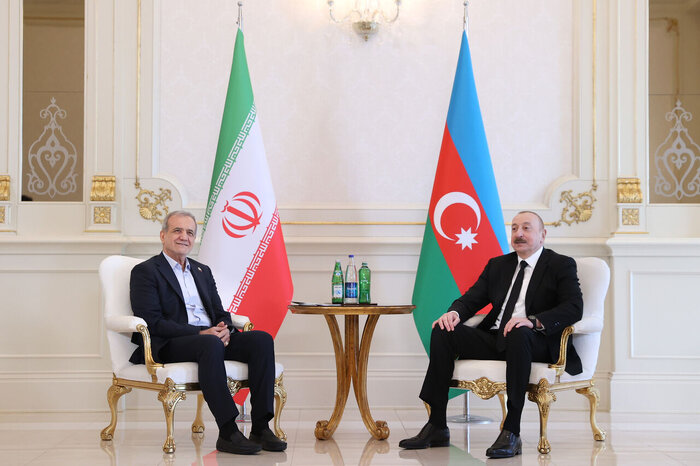
In addition to the bilateral arena, the two countries also cooperate in regional and international forums and believe that lasting peace and stability in the South Caucasus are a prerequisite for the development and prosperity of the peoples of the region. Political consultations at high levels have also increased in recent months and are set to continue during this visit.
The visit of our Foreign Minister to Baku, within such a framework, is an opportunity to strengthen cooperation, manage differences, and discuss new paths of interaction; a path that can take Tehran-Baku relations to a new stage based on common interests and regional stability.
Post a comment