
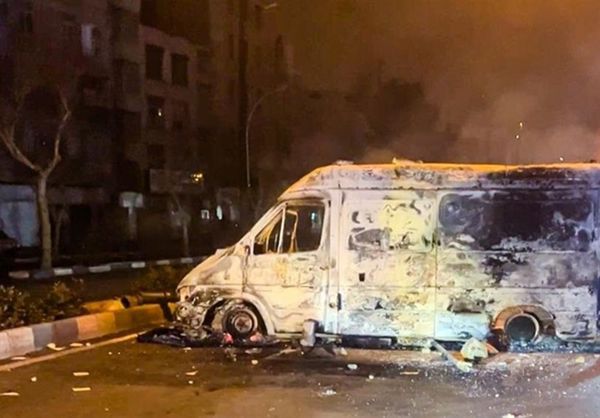
An operational expert from Tehran's emergency services tells the story of the rioters' attack on emergency services.
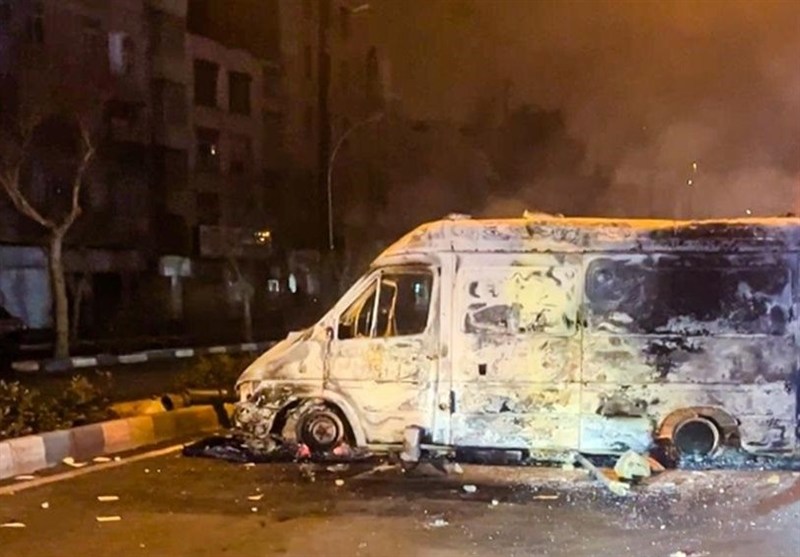
According to Ashura News, citing Tasnim News Agency, during the riots of January 8 and 9, many public properties, including emergency ambulances, were targeted and destroyed by rioters, an act that not only caused material damage but also endangered the lives of citizens in need of emergency medical services.
Although the duty of emergency services in accidents is to provide assistance to the body, taking into account the identity and beliefs of individuals, the images recorded by CCTV cameras of the recent tragic events indicated that some rioters were preventing ambulances from carrying out their duties; stopping ambulances that were trying to provide assistance to the injured, shooting at ambulances, and beating emergency forces that were dispatched to homes and streets to save the lives of patients and citizens were some of the actions of those who attacked emergency vehicles.
Vahid Maleki, a senior operational expert at Tehran Province's emergency services, who was present in the field during the riots to provide services to citizens and the injured, recounts the events of the nights of January 8 and 9:
The 115 emergency force stated: “As the emergency duty manager, I was on shift from 8 am on Thursday and was even present in the office until late on Friday. Considering the reports and calls we had received in advance and the possibility of congestion and chaos in the city, we had prepared measures and arrangements in advance.
He added: “Unfortunately, one of the most difficult working days for the emergency department occurred due to the high volume of injuries and deaths. That night, at around 7:30 pm, I was patrolling the city with the emergency command vehicle. The situation was normal and the city was calm. At around 8 pm, we received news that one of our ambulances had been stopped in the eastern part of Tehran and that there was a possibility of damage. I decided to go to the scene in person to check the situation.”
The senior emergency operations expert continued: I reached that area at around 8:20 to 8:30, and I encountered a scene that was completely different from the situation half an hour ago. I had never seen such scenes during my years of service in the emergency department and during various events in the country. The signs in the middle of the street were destroyed one by one and thrown to the left and right of the road, and the road was blocked. A large amount of garbage was on fire in the middle of the road. Another strange incident was the parking and burning of buses in a cross-section on the street, which clearly showed that the perpetrators intended to create a physical barrier for the movement of people, especially relief forces such as the emergency department.
Maleki said: There had already been a trend against the emergency department, claiming that the emergency department was acting against the people, while our main goal has always been to serve the people and save lives.
He noted: "In the square, people who had committed violence and riots were present on one side and security forces on the other, and both sides had injuries. Our main challenge began precisely from here. People or injured people would call and ask for an ambulance, but when our ambulances wanted to move towards the scene of the incident, they blocked the road, did not allow them to approach, and even attacked them."
The senior emergency operations expert added: "Unfortunately, at that very moment, the rioters had prevented three of our ambulances from moving forward, beat our colleagues out of the ambulances, two of the ambulances were severely damaged; their windows were broken and their equipment was stolen. Worse still, after about 20 minutes of forced stopping on the street, one of the ambulances was set on fire by another group of people, all the equipment inside it was burned and the ambulance became completely unusable."
Maleki said: "In those circumstances, our hearts were burning. Our only concern was to do something for the injured people that night. Thank God, despite all these problems, my colleagues tried their best to provide service."
He continued: "In one case, one of our colleagues, who was trying to save the life of one of the people present at the scene by performing cardiopulmonary resuscitation, was suddenly attacked by a woman. Our colleague was thrown to the ground and his arm was broken."
The senior emergency operations expert emphasized: "These events seriously disrupted our service." With the street blockades they had created, ambulances were attacked, they were set on fire, they were shot at, and the main goal of these actions was to prevent the emergency services from performing their duties, and the increase in the percentage of deaths was planned. Unfortunately, some people intended to cripple the emergency services, but thank God they were unable to achieve their goal. We carried out almost 90 percent of the missions efficiently, transported many needy patients to the hospital, and treated many on the scene, and thank God we emerged from this incident with pride.
Post a comment